Telangana Releases Landmark Caste Survey Findings
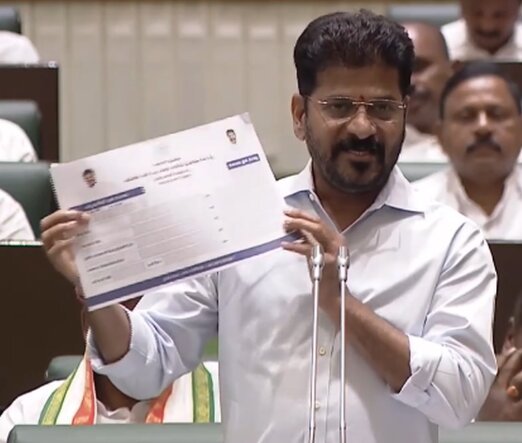
The Telangana government has officially released the detailed findings of the Socio-Economic, Educational, Employment, Political, and Caste (SEEEPC) Survey, marking a historic moment for the state. This comprehensive report, made public on April 15 and 17, 2026, provides an unprecedented look into the lives of 3.55 crore people across 242 castes. The data reveals that Backward Classes (BC) constitute the largest social group in the state at 56.33%, followed by Scheduled Castes (SC) at 17.43%, Other Castes (OC) at 15.79%, and Scheduled Tribes (ST) at 10.45%.
A central feature of the report is the Composite Backwardness Index (CBI), which highlights deep-rooted social and economic disparities. The Independent Expert Working Group (IEWG) found that Scheduled Castes and Scheduled Tribes are approximately three times more backward than general caste communities. Furthermore, the survey identifies that 135 out of 242 castes are more backward than the state average. In a surprising demographic shift, nearly 12 lakh individuals—roughly 3.4% of the population—opted for the “No Caste” category, making them the tenth-largest community in the state.
Economic and land ownership data have sparked significant debate among political circles. The Reddy community, representing 4.8% of the population, holds 13.5% of the state’s total land, while other general castes like Velamas and Kammas also show high levels of asset ownership. Conversely, communities such as SC Bedas and certain Muslim groups report significantly less land relative to their population share. The survey also notes that while 47% of youth have studied in English medium, access ranges drastically from 72% in certain OC groups to just 11% in ST communities.
The report also sheds light on the effectiveness of welfare distribution. It found that while agricultural schemes like Rythu Bharosa often benefit more prosperous groups, the free bus travel for women has been a highly effective tool for reaching the most deprived sections, with 20% of its beneficiaries being SC women. With nearly 89,000 children still engaged in daily wage work, primarily from SC and ST backgrounds, the findings serve as a stark reminder of the challenges that remain.
As these results enter the public domain, they are expected to reshape the political and policy landscape of Telangana. Government ministers have emphasized that this data will be instrumental in designing more targeted and equitable welfare programs. With the details now available on official portals, the “health of Telangana society” is under a microscope, setting the stage for intensive legislative discussions and future governance reforms based on hard data rather than estimates.