New Tribute to Telugu Icon Ignites Political Debate
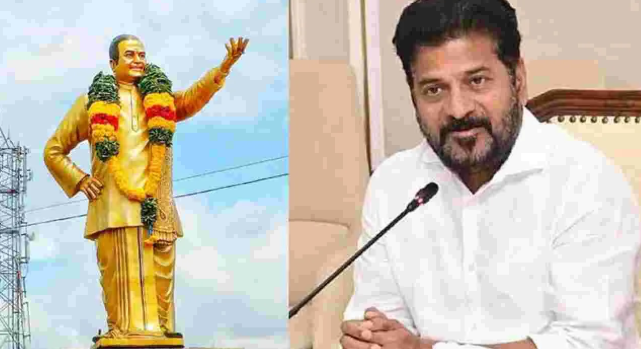
The political landscape in Telangana witnessed significant movement as Chief Minister A. Revanth Reddy officially unveiled a massive twenty-three-foot bronze statue of legendary actor and former Chief Minister Nandamuri Taraka Rama Rao, popularly known as NTR. The grand monument has been permanently installed at the bustling Maitrivanam junction in the Ameerpet area of Hyderabad.
The high-profile inauguration took place to honor the birth anniversary of the late leader, drawing massive crowds of supporters, political dignitaries, and cultural groups. The administration confirmed that the installation fulfills an explicit public commitment made during local campaign rallies, aimed at celebrating historical symbols of Telugu pride within the capital city.
However, the decision to install a prominent monument for a leader traditionally associated with the political roots of undivided Andhra Pradesh quickly triggered intense regional debates among various political factions. Critics from regional opposition groups raised questions regarding the placement of the statue, arguing that state resources and public junctions should prioritize prominent figures originating directly from the Telangana movement.
In a strong response to the growing criticism, Chief Minister Revanth Reddy defended the decision during his public address at the venue. He asserted that NTR was a towering national icon whose massive contribution to society, welfare, and cinema transcends geographical borders, caste lines, or narrow regional identities. The Chief Minister emphasized that the legendary leader belongs broadly to the entire Telugu-speaking population.
The Chief Minister went on to connect the welfare ideology of his current administration to the structural governance models introduced during the previous eras. He noted that foundational public programs, such as subsidized food grain distribution, rural housing initiatives, and social support systems for weaker sections, draw strong administrative inspiration from the path-breaking schemes pioneered decades ago.
Furthermore, the state leadership highlighted significant historical reforms, particularly the abolition of the old feudal land-record systems in rural areas, which structurally empowered underprivileged communities across Telangana villages. The administration clarified that honoring such systemic change-makers remains essential for fostering social awareness and inspiration among the younger generation.
Local administration authorities and urban development bodies coordinated closely over the past months to ensure the seamless execution and placement of the structure without disrupting the busy traffic flow at the commercial junction. The area has now been designated as a major landmark, reflecting the shared cultural and political history of the region.
As political reactions continue to emerge from different parties, the government maintained that the installation symbolizes unity, respect for democratic pioneers, and a focus on inclusive development. The event concluded with senior ministers, public representatives, and family members of the late leader paying rich floral tributes at the newly inaugurated site.