Historic Showdown in Parliament Over 850-Seat Expansion
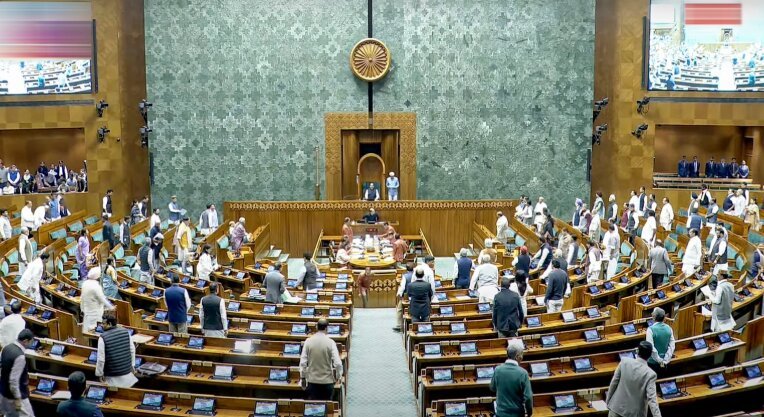
The Indian Parliament witnessed a high-voltage drama today as a three-day Special Session commenced to decide the future of India’s democratic map.
The central government officially introduced the Constitution (131st Amendment) Bill, 2026, alongside the controversial Delimitation Bill.
Union Law Minister Arjun Ram Meghwal tabled the legislation, which proposes expanding the Lok Sabha’s strength to a staggering 815 or 850 members.
This move is aimed at fast-tracking the 33% reservation for women in legislative bodies by redrawing constituency boundaries immediately.
Prime Minister Narendra Modi, addressing the Lok Sabha, urged all parties to support the bills in the spirit of “Nari Shakti” (woman power).
He issued a stern warning to the opposition, stating that those who block the empowerment of women today would “pay a heavy political price” in the future.
The Prime Minister emphasized that women at the grassroots level have developed a deep political consciousness and are now demanding their rightful share in decision-making.
He pleaded with the House to pass the amendment unanimously to ensure gender equality in the 2029 general elections.
However, the opposition “INDIA” bloc has raised a massive red flag, calling the move a “constitutional hijacking.”
Leaders from the Congress, TMC, and DMK argued that linking women’s quotas to delimitation is a “Trojan horse” meant to favor northern states.
They pointed out that slower-growing southern states like Tamil Nadu and Kerala would see their parliamentary influence shrink if seats are redistributed based on current population.
Protests led by Tamil Nadu CM MK Stalin echoed on the streets, demanding that the reservation be implemented within the existing 543 seats.
Home Minister Amit Shah attempted to calm the waters by clarifying that the proposed changes would not disadvantage any specific region.
He argued that a larger Parliament is a logistical necessity to accommodate the 272 seats that would be reserved for women under the new law.
The government also introduced the Union Territories Laws (Amendment) Bill to ensure the quota extends to regions like Puducherry and Delhi.
With the NDA needing a two-thirds majority, the next 48 hours will be a critical test of India’s federal structure and legislative unity.