Pawan Kalyan Raises Alarm Over Godavari Pollution Ahead of Pushkaram
Andhra Pradesh Deputy Chief Minister K. Pawan Kalyan raised a serious alarm regarding the increasing pollution levels in the Godavari River. During an extensive high-level field review, he made it clear that immediate and decisive structural measures are necessary to safeguard the ecosystem. The Deputy Chief Minister expressed heavy concern that letting millions of devotees step into highly contaminated waters for ritual bathing could trigger significant public health hazards.
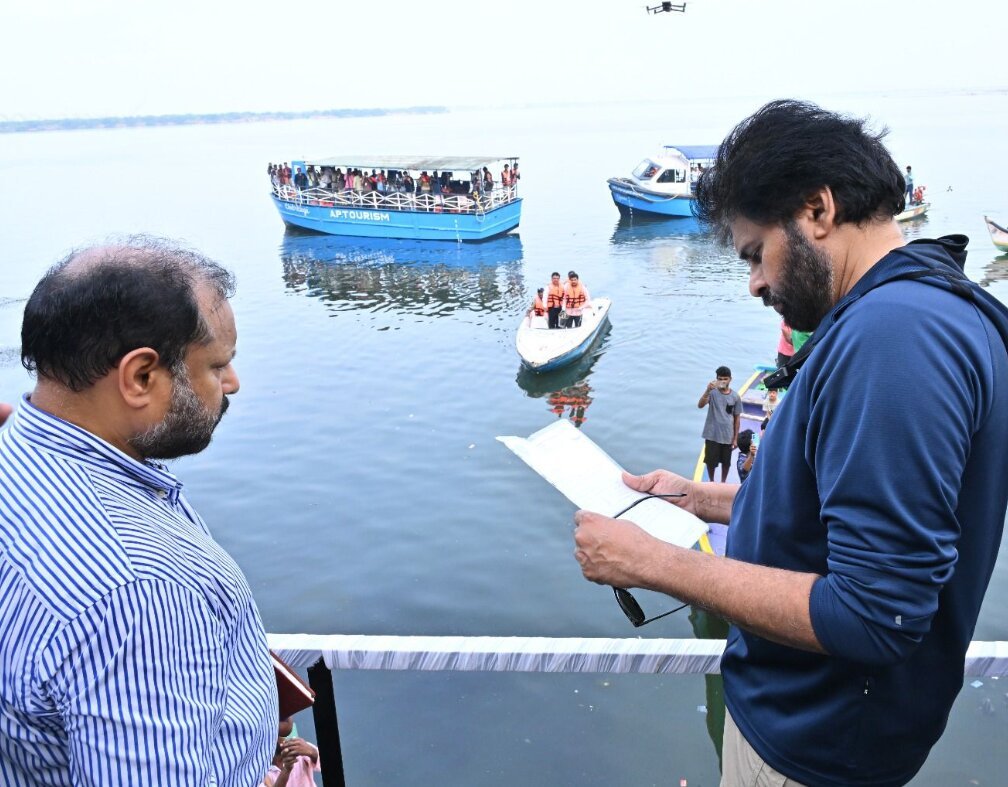
The assessment began early in the morning when the Deputy Chief Minister, accompanied by senior environment and pollution control officials, embarked on a boat inspection from Pushkar Ghat to Kotilingala Ghat. During this journey, he witnessed multiple points where untreated urban sewage and hazardous industrial chemical waste flow openly into the river. He stood at the Nalla Channel monitoring site, ordering instant testing of water samples right in front of him to gauge the precise extent of biochemical contamination.
A major portion of the confrontation centered around large-scale commercial facilities, including Andhra Paper Limited, which have been discharging untreated manufacturing effluents into the upstream waters near Toorpu Lanka. Expressing clear dissatisfaction over the surveillance failures of the State Pollution Control Board, the Deputy Chief Minister instructed officials to serve immediate legal notices to the polluting industrial managements. He demanded a complete overhaul of corporate wastewater management systems, specifying that no industrial plant will be permitted to let single drops of untreated waste stream into the riverbed.
To handle the structural revamping smoothly, the government announced an emergency allocation of 100 crore rupees specifically through the Pollution Control Board to build advanced, modern water treatment facilities. The administration also directed regional collectors to modify the existing regional infrastructure development plan to heavily prioritize the absolute restoration of the river. Setting a hard target for initial regional updates, a modern pilot model ghat is ordered to be structurally ready within the next few weeks to establish a baseline for pristine water conditions
Estimating a massive human footfall of nearly ten crore pilgrims traveling across regional boundaries for the river festivities, the administration is moving toward a highly structured crowd decentralization policy. Plans are being drawn up to prevent major overcrowding at Rajamahendravaram by setting up organized sub-centers and developing hundreds of adjacent village panchayats along the river banks. This strategic shift aims to maintain public sanitation while uniformly distributing resources across six major coastal districts.
In tandem with the ecological cleanup, the Deputy Chief Minister initiated an extensive campaign to achieve a plastic-free environment around the riverfront zones. A complete ban on single-use plastic commodities is set to be strictly enforced throughout the river-basin jurisdictions, replacing them with strictly biodegradable alternatives. The government emphasized that industrial development and economic growth must run parallel to uncompromised ecological balance, assuring citizens that the state will take full accountability to bring pristine sanctity back to the natural water resources.