NDA Government Pushes Rayalaseema Irrigation Projects
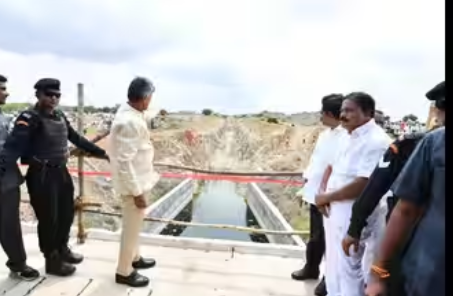
The regional administration in Andhra Pradesh has accelerated vital agricultural water programs.
State leaders are prioritizing long-delayed irrigation networks to support dry farming belts.
Officials recently announced a massive financial allocation for regional water management.
The core objective is to bring persistent relief to chronically parched rural territories.
Decades of agricultural distress have severely limited farming output across southern districts.
The current strategy targets structural completion of pending canals and major reservoirs.
State water resource departments report active execution on multiple multi-crore initiatives.
Key networks like the Handri-Neeva system are receiving heavy capital infusions.
Engineers are focusing on expanding canal capacity to reach distant tail-end zones.
Officials stress that stable distribution channels will finally supply farms reliably.
Thousands of traditional village ponds and tanks undergo extensive desiltting operations.
Restoring old water storage bodies helps improve local groundwater levels significantly.
Agricultural experts note that increased moisture availability prevents crop failure risks.
State ministers inspected various project sites to monitor construction quality and pace.
Opposition factions have also urged faster execution of pending regional lift schemes.
Political parties across lines acknowledge the immense value of stable water networks.
Local farming communities have expressed cautious optimism regarding these ongoing works.
Engineers have deployed modern boring machinery to finish complicated tunnel routes safely.
Environmental guidelines remain strictly observed while drilling through sensitive reserve forests.
The integrated approach connects river basins to maximize overall storage potential.
State authorities intend to harness surplus floodwaters during active monsoon cycles.
Executing these massive structural plans requires precise coordination among administrative bodies.
Financial allocations are monitored closely to prevent unwarranted delays or cost overruns.
Public works departments have set strict deadlines for finishing core distribution units.
Enhanced irrigation coverage directly impacts rural employment and local economic growth.
Horticulture and food processing sectors stand to gain immensely from regular supply.
Future planning includes expanding micro-irrigation setups to optimize every available drop.
Experts believe sustained water security will reverse historical migration trends.
Rural families can look forward to sustainable harvests and improved household incomes.
The successful realization of these ventures remains a crucial benchmark for governance.