AP Government to Frame Action Plan on Responsible Spending
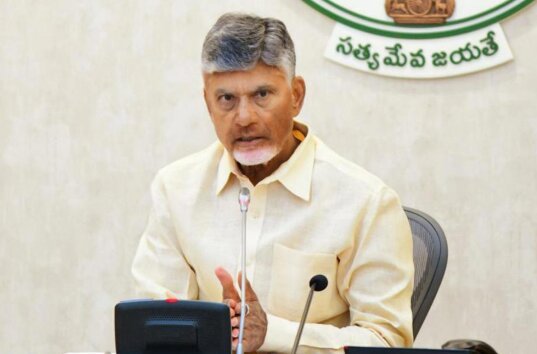
The Andhra Pradesh government is pivoting toward a rigorous fiscal strategy to ensure long-term economic stability. Chief Minister N. Chandrababu Naidu has officially directed officials to draft a comprehensive “Action Plan on Responsible Spending.” This initiative aims to balance welfare commitments with essential infrastructure development while keeping the state’s debt profile under control.
This move comes at a time when the state is navigating complex financial challenges inherited from previous years. The administration emphasizes that every rupee spent must generate value for the public. The proposed plan will focus on eliminating wasteful expenditure across various departments and prioritizing projects that offer the highest social and economic returns for the citizens.
A key pillar of this action plan is the introduction of a performance-based budget allocation. Departments will now be required to show measurable outcomes to secure further funding. This shift is intended to foster transparency and accountability within the bureaucracy. By streamlining administrative costs, the government hopes to redirect significant funds toward education and healthcare sectors.
Furthermore, the state cabinet is discussing the integration of digital tracking systems to monitor real-time spending. This technology will help identify leaks and ensure that subsidies reach the intended beneficiaries directly. The Chief Minister stressed that fiscal discipline is not about cutting essential services but about managing resources with the foresight of a growing economy.
Economists have noted that AP’s approach could serve as a model for other states facing high debt-to-GDP ratios. By framing this action plan, the government is signaling to investors and global markets that Andhra Pradesh is committed to a stable and predictable financial environment. The finalized framework is expected to be presented in the upcoming legislative session for broader discussion.
The public response remains focused on how this plan will impact existing welfare schemes. However, government spokespersons have reassured that “Responsible Spending” specifically targets systemic inefficiencies rather than reducing the social safety net. The ultimate goal is to build a self-sustaining economy that does not rely solely on heavy borrowing to meet its operational requirements.