Akka Mahadevi The Mystic Poet Who Chose Devotion
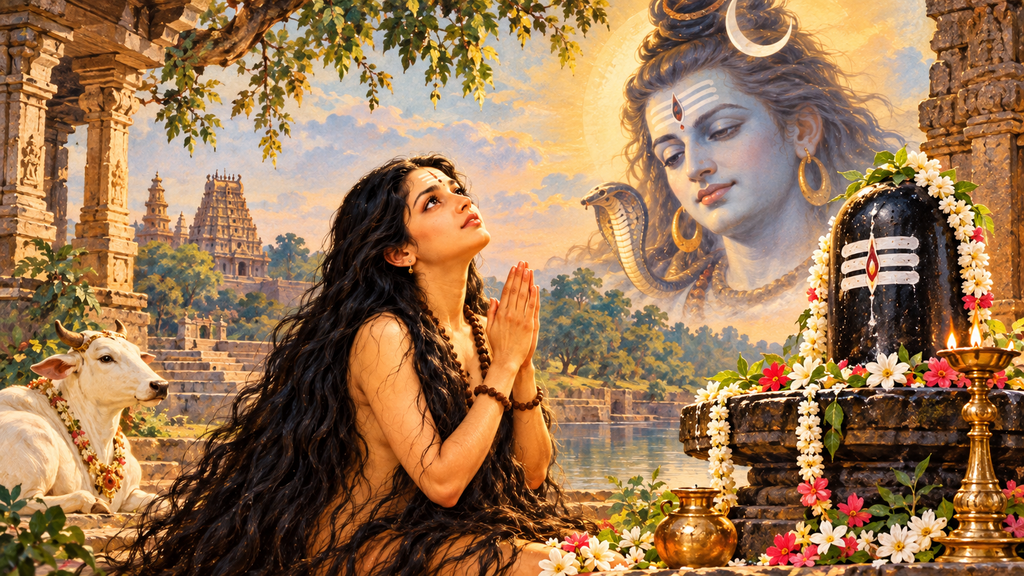
Akka Mahadevi was one of the most important women mystic poets of medieval India. She lived in the 12th century and became a major voice of the Kannada Bhakti tradition. She is closely associated with the Sharana movement and the spiritual tradition connected with Lingayat and Veerashaiva thought. Her life is remembered for her deep devotion to Lord Shiva, her fearless search for spiritual freedom and her powerful Kannada vachanas. Unlike ordinary poetry, her writings often read like direct conversations with the divine. She expressed love, surrender, longing and spiritual experience in simple but deeply emotional language. Her chosen form of Shiva was Chennamallikarjuna, a name that became central to her spiritual identity. Even centuries after her time, her words continue to be read and discussed across Karnataka and beyond. Akka Mahadevi also holds a special place in the history of Indian women writers because she spoke openly about spiritual independence at a time when social life was strongly controlled by custom and tradition. Her story combines poetry, devotion, courage and a search for truth. The historical details of her life are not completely certain, because much of what is known comes from later literary and religious traditions. However, her vachanas provide important clues about her spiritual journey and her understanding of life.
Akka Mahadevi is traditionally believed to have been born at Udutadi in present-day Karnataka. Some accounts identify her parents as Nirmala and Sumati, although scholars note that the names may belong to the traditional accounts rather than securely documented historical records. From an early age, she is described as having a strong spiritual inclination. Instead of being attracted mainly to worldly pleasures, she developed a deep attachment to Lord Shiva. Her devotion gradually became the centre of her life. In her spiritual imagination, Shiva was not simply a distant deity but the divine beloved and the ultimate reality she wished to experience. This personal relationship with the divine became one of the strongest features of her poetry. Traditional accounts say that she was known for her beauty, intelligence and spiritual determination. Her story later became part of the rich oral and literary traditions surrounding the Sharana saints. These traditions remember her not simply as a poet but as a woman who refused to give up her inner spiritual identity. Her childhood is therefore remembered as the beginning of a journey that would eventually take her away from conventional expectations and towards a life dedicated to devotion. Although historians must distinguish between documented evidence and later tradition, the consistency of her spiritual image across generations shows the lasting importance of her story.
One of the most important episodes associated with Akka Mahadevi concerns her relationship with King Kaushika. Traditional accounts say that the king was attracted to her and wanted to marry her. The circumstances of this episode vary across different versions of her life story. What remains central to the tradition is Akka Mahadevi’s determination that her spiritual commitment to Chennamallikarjuna could not be replaced by worldly attachment. She is remembered as accepting marriage only under conditions that protected her freedom and devotion. When those conditions were not respected, she chose to leave the royal environment. This decision became one of the defining moments in her life. Her departure was not presented as an ordinary family disagreement but as a spiritual decision based on her belief that the divine was her true and lasting companion. Her choice challenged the expectations placed on women in medieval society. Akka Mahadevi’s story therefore became an important example of spiritual independence. She did not measure her life through wealth, status, marriage or royal privilege. Instead, she considered inner freedom more valuable than material comfort. Her decision to walk away from a powerful social position is one of the reasons why later generations remembered her as a fearless woman saint.
After leaving behind worldly life, Akka Mahadevi is traditionally believed to have travelled in search of spiritual companionship and deeper realization. Her journey eventually brought her into contact with the Sharana community associated with the great centre of spiritual discussion at Kalyana. This was a remarkable period in Kannada religious and literary history. The Sharana movement included poets, thinkers and spiritual seekers who expressed their experiences through vachanas. Basavanna was one of its most prominent figures, while Allama Prabhu became another major spiritual personality associated with the movement. Akka Mahadevi entered this environment as an independent spiritual voice. Her presence was significant because women were also participating in the creation of vachana literature. Her conversations and encounters with other spiritual figures became part of the traditions surrounding the movement. The vachana tradition allowed poets to speak about spiritual experience without depending on highly formal literary structures. This made it possible to express personal questions, doubts, devotion and realization in a direct manner. Akka Mahadevi used this form with remarkable intensity. Her poetry did not simply describe religious beliefs. It often expressed a personal relationship between the individual soul and the divine. Her words show a constant desire to move beyond temporary identities and discover a deeper spiritual truth.
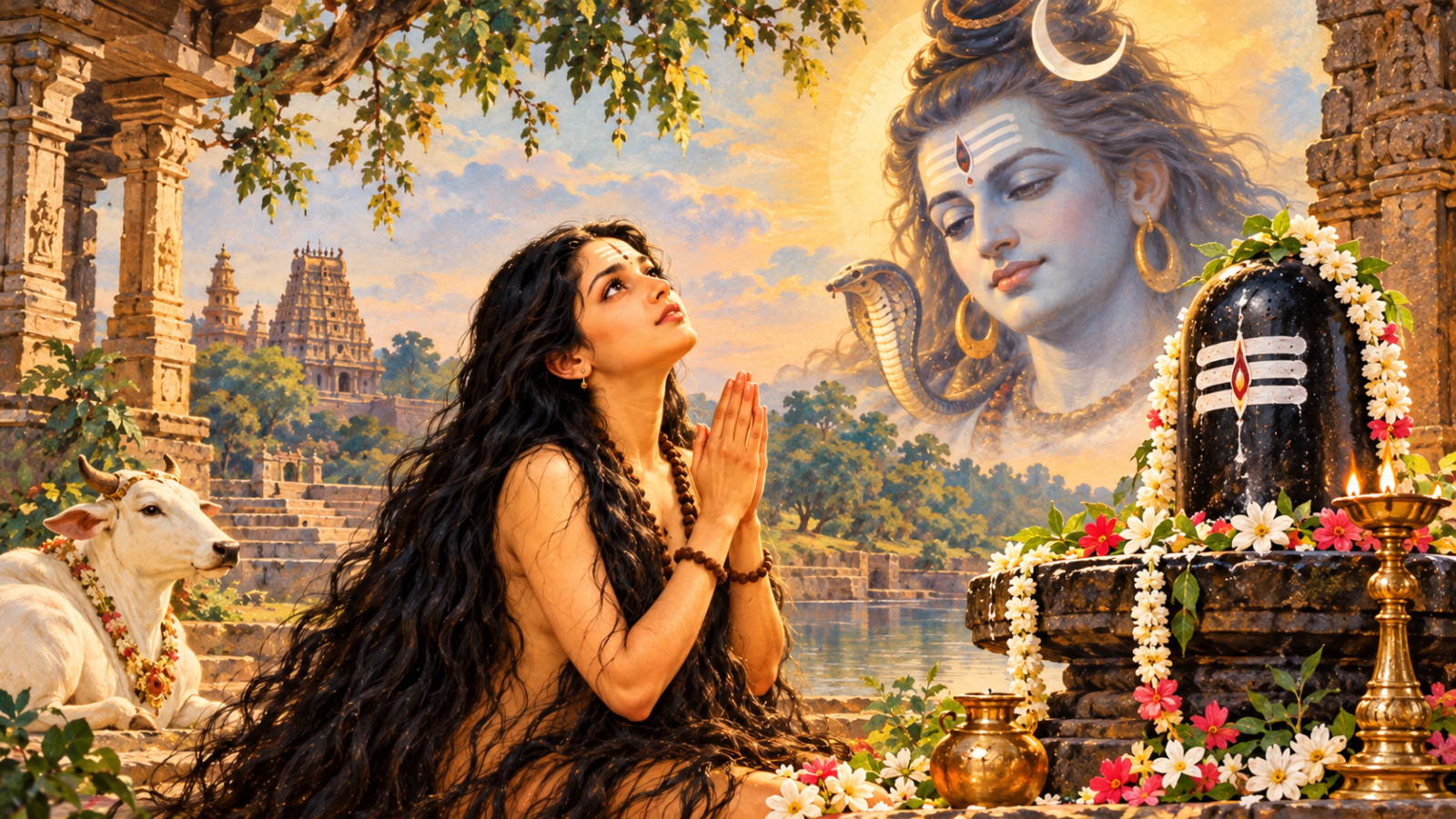
The vachanas of Akka Mahadevi are among the most important parts of her legacy. A vachana is a short poetic or spiritual expression associated with the Kannada Sharana tradition. Her vachanas frequently use images of love, nature, the body, impermanence and the search for the divine. She often presents worldly life as temporary and contrasts it with the lasting nature of spiritual truth. Chennamallikarjuna appears repeatedly as the centre of her devotion. Her language can be intensely personal, and at times her poems sound like a conversation between a lover and the beloved. Yet the beloved in her poetry represents the divine rather than an ordinary human relationship. This spiritual symbolism gives her work a distinctive character. She questioned attachment to possessions, social status and physical identity. At the same time, her poetry does not feel distant or abstract. It carries emotion, longing and personal experience. Her ability to combine simple expressions with deep philosophical meaning helped her vachanas survive across centuries. Kannada readers continue to study her writings as both literature and spiritual expression. Her work also demonstrates how the Bhakti tradition created space for individual voices that did not always follow conventional literary or social expectations.
A striking feature of Akka Mahadevi’s life is her rejection of excessive attachment to the physical body and worldly identity. Traditional accounts famously describe her as abandoning ordinary clothing during her spiritual journey. This part of her story has been interpreted in different ways, but within the devotional tradition it represents her rejection of worldly shame, social status and attachment to physical appearance. Her life was understood as a movement towards complete surrender to the divine. She did not want her identity to be defined by beauty, marriage, wealth or social position. Instead, she wanted to be known through her relationship with Chennamallikarjuna. This theme appears repeatedly in the way her life and poetry have been remembered. Her story should therefore be understood within the spiritual and literary culture of medieval Karnataka rather than judged only through modern social categories. The central idea in her tradition is that the soul should not remain trapped by external identity. Her poetry turns this idea into an emotional spiritual journey. She speaks of longing for union with the divine and of the difficulty of separating true spiritual knowledge from temporary worldly attractions. This made her one of the most distinctive voices among the women saints of the Kannada Bhakti tradition.
Akka Mahadevi’s spiritual thought was closely connected with the idea of surrender. For her, devotion was not merely the performance of religious rituals. It was an inner transformation in which the seeker tried to overcome ego, attachment and false identity. Her poetry repeatedly returns to the question of what remains permanent when worldly relationships and possessions disappear. She believed that the search for the divine required honesty and complete dedication. This explains why her vachanas often carry an intense emotional quality. She could speak about God with the language of love while also raising deep questions about existence. Her spiritual expression was personal, direct and fearless. She did not present devotion as something limited to temples or formal religious institutions. Instead, she presented it as a way of living and understanding oneself. Her writings also reveal a strong awareness of the difference between external appearance and inner truth. A person may possess wealth, beauty or social recognition, but these things do not provide permanent spiritual fulfilment. For Akka Mahadevi, the search for Chennamallikarjuna represented the search for the eternal. This idea helped her poetry remain meaningful to readers long after the social world in which she lived had changed.
The Sharana movement gave Akka Mahadevi a wider intellectual and spiritual setting in which her voice could be heard. The movement encouraged direct spiritual expression and produced a large body of Kannada vachana literature. It also created an unusual space for women to participate in literary and spiritual discussions. Akka Mahadevi became one of the best-known women associated with this tradition. Her contribution is particularly important because her poems are not simply descriptions of devotion written from a distance. They are personal expressions of spiritual experience. Her voice is often uncompromising when discussing attachment, desire and social expectations. This made her different from many conventional literary figures of her time. She is remembered alongside major Sharana figures such as Basavanna and Allama Prabhu, although each had a distinct style and spiritual emphasis. Her place within this tradition shows the importance of women in the development of medieval Kannada literature. The vachana tradition also helped create a literary language that could communicate philosophical ideas through everyday expressions. Akka Mahadevi used that opportunity to speak about the relationship between the human soul and the divine. Her work remains an important part of the cultural history of Karnataka.
The final years of Akka Mahadevi’s life are also surrounded by tradition rather than complete historical documentation. Many accounts connect her with the Srisaila region and with continued devotion to Chennamallikarjuna. Srisaila has long been an important Shaiva pilgrimage centre, and her association with the place became an important part of her spiritual legacy. Traditional narratives describe her continuing search for union with the divine until the end of her life. The exact circumstances and date of her death are not securely established in the same way as the life details of a modern historical figure. This uncertainty does not reduce the importance of her contribution. Her vachanas provide a more lasting record of her inner world than many biographical details could provide. Through those poems, readers encounter a woman who questioned conventional ideas of identity and sought a direct relationship with the divine. Her life gradually became part of the cultural memory of Karnataka. Stories about her were passed through literary works, oral traditions and religious communities. Early biographies and later texts helped preserve different versions of her journey. As a result, Akka Mahadevi today stands at the meeting point of history, literature, devotion and cultural memory.
Akka Mahadevi’s influence continues far beyond the period in which she lived. Her vachanas remain important to Kannada literature, and her life is remembered in discussions about Bhakti, women poets and spiritual freedom. She showed that poetry could become a way of questioning the meaning of life rather than simply describing the world around the poet. Her devotion to Chennamallikarjuna gave her a clear spiritual centre, while her rejection of worldly attachment gave her story a distinctive force. For many readers, she represents courage, devotion and the freedom to follow an inner calling. For students of Kannada literature, she is an important poet of the vachana tradition. For those interested in Indian spiritual history, she represents one of the powerful voices that emerged from the medieval Bhakti movement. Her life also reminds us that historical memory can contain both documented facts and later traditions, and these should be understood separately. What remains beyond dispute is the extraordinary literary and cultural influence of her name and writings. Akka Mahadevi transformed personal devotion into poetry that could speak across generations. Her journey from a young woman devoted to Shiva to a widely remembered mystic poet has made her one of the enduring figures of Indian devotional literature. Even today, her message continues to invite readers to look beyond temporary identity and search for a deeper understanding of life, devotion and the self.
The article above is written from established biographical and literary material while keeping the copy original and suitable for translation. Historical accounts of Akka Mahadevi contain traditional elements Inspired by Spiritual speaker Alamkaram Mandakini (Nellore)