Arvind Kejriwal Announces March Against Centre’s E20 Fuel Policy
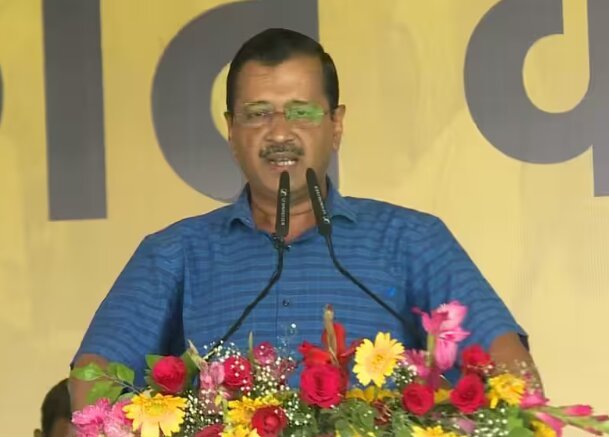
Political tensions rose sharply in the national capital today as opposition leaders organized a major public demonstration. Aam Aadmi Party national convener Arvind Kejriwal led a determined group of citizens toward the central government headquarters. The primary objective of the march was to register widespread public dissent against the ongoing implementation of E20 fuel. Thousands of vehicle owners across the country have expressed deep anxiety regarding the long-term impact of ethanol-blended petrol. Protesters carried massive bundles of signed petitions collected from ordinary motorists who reported mechanical issues in their personal vehicles.
Law enforcement agencies deployed heavy barricades and security personnel along the designated route to restrict the movement of the large crowd. Police officials confirmed that prior permission for the specific marching route toward the executive leader’s residence had not been formally granted. Consequently, security forces intercepted the demonstrators near Firoz Shah Road, preventing them from advancing further toward their intended destination. Faced with sudden physical roadblocks, party leaders and participating supporters chose to stage an immediate sit-in protest directly on the public tarmac. Senior political figures, including former deputy chief minister Manish Sisodia and parliamentarian Sanjay Singh, joined the sit-in demonstration to support the cause.
During the roadside gathering, organizers addressed the gathered supporters and media representatives regarding the core grievances of the campaign. The political faction raised three distinct demands concerning retail fuel pricing and consumer choice at local dispensing stations. First, they insisted that the administration must make traditional unblended petrol continuously available alongside the new ethanol mixture. Second, they argued that if the blended alternative remains mandatory, it should be retailed at a significantly reduced price point compared to standard fuel. Third, the party criticized broader economic pressures and alleged that administrative decisions failed to adequately protect the financial interests of regular working-class motorists.
Critics of the policy pointed out that engine components in older vehicle models may suffer from premature wear and chemical corrosion over time. Independent mechanics have frequently noted that rubber seals and metal fuel lines react poorly to higher concentrations of agricultural ethanol. Although federal ministries have defended the initiative as a progressive step toward reducing carbon emissions and cutting foreign oil import bills, skeptics remain unconvinced. The ongoing debate has triggered broader nationwide conversations regarding consumer rights, automotive engineering standards, and environmental trade-offs. Observers note that public resistance could gain further momentum if vehicle maintenance complaints continue to rise in coming months.
Ruling party representatives strongly condemned the day’s events, dismissing the demonstration as political theatrics designed to create unnecessary public panic. Cabinet spokespersons maintained that all fuel transition policies undergo rigorous scientific evaluation and meet international environmental benchmarks before commercial rollout. They emphasized that supporting domestic agricultural sectors through biofuel production ultimately strengthens the national economy rather than harming consumer interests. Despite the sharp verbal exchanges between political adversaries, law enforcement managed to keep the situation peaceful throughout the afternoon hours. As authorities eventually took custody of the submitted public petitions, opposition leaders vowed to carry their legislative opposition into state assemblies across the country.