Police Deny Permission for Secretariat Employees’ “Chalo Vijayawada” Protest
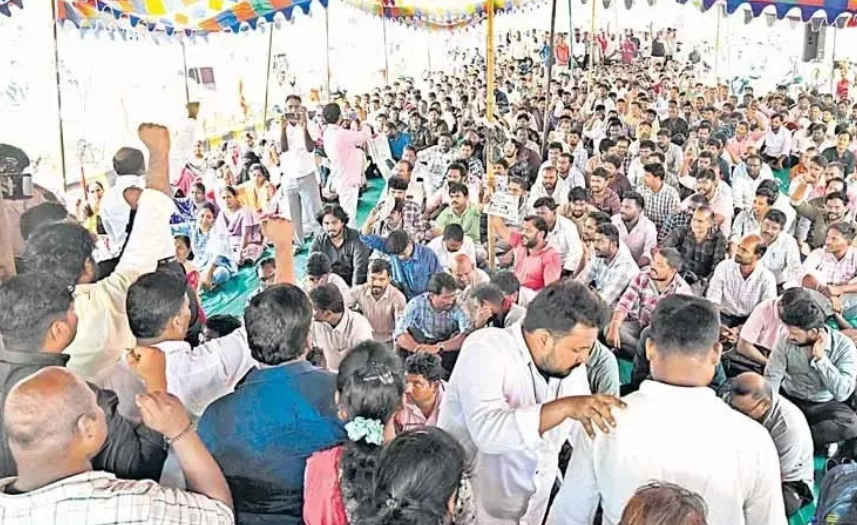
Tensions flared across Vijayawada as village and ward secretariat employees organized a major demonstration. The local police department had previously denied permission for the proposed assembly. Authorities cited public safety, ongoing festive immersions, and heavy weather challenges as primary reasons. Prohibitory orders under the police act were enforced heavily throughout the urban centers. Despite official restrictions, thousands of staff members gathered to voice their longstanding service grievances. Demonstrators assembled near designated points to demand immediate administrative attention and policy reforms. The protesting workers raised slogans calling for the immediate grant of pending increments.
They also demanded a clear and permanent structure for career promotions. Many employees expressed deep frustration over delayed wage payments and pending financial arrears. Association leaders argued that their workload remains immense while basic job securities are ignored. Police forces deployed heavy barricades at bus stations, railway junctions, and key transit points. Several participating workers were taken into preventive custody to deter the expanding crowd. Clashes of opinion erupted between state authorities and union representatives over the handling of the event. Protestors claimed that peaceful assembly is a fundamental democratic right of every working citizen. Government representatives maintained that unauthorized rallies violate legal guidelines and disrupt public order. Senior ministers later addressed the media to clarify the administration’s stance on employee welfare.
Officials stated that administrative files regarding service regularizations are already under active review. The finance department is currently processing requests related to legitimate wage adjustments and increments. Cabinet members urged workers to maintain patience while official channels review their administrative representations. Labor leaders insisted that agitations will continue unless written assurances are provided promptly. The standoff highlighted deep friction between grassroots public administrators and state leadership. Observers noted that balancing administrative discipline with employee satisfaction remains a critical policy challenge. Local traffic and routine movement experienced brief disruptions due to heavy security deployment. Civil society groups called for constructive dialogues to prevent further escalation of administrative friction. Public services across various regional centers faced minor inconveniences during the day of action. Further negotiations between union leaders and government officials are expected in the coming days. The administration remains firm on maintaining public order while evaluating genuine staff petitions. Workers continue to monitor developments closely as union representatives deliberate their next strategic steps. The episode underscores the complex dynamics of labor management within public sector institutions. Resolution of these core grievances will shape future industrial relations across regional administrative bodies.