PM Modi’s 80th Independence Day Address & “Dimagi Naxals” Warning
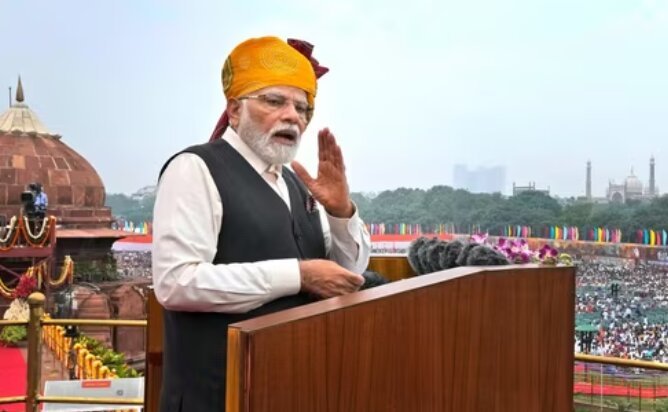
Prime Minister Narendra Modi addressed the nation from the historic Red Fort during the eightieth Independence Day celebrations. Standing before a large gathering of citizens, security forces, and national leaders, he spoke about the journey of the country. He focused heavily on internal security, highlighting the long-standing battle against Maoist insurgency in deep forest regions. The Prime Minister stated that armed Naxalism has been heavily cornered and is currently breathing its last breath across the nation. He remembered the thousands of brave police and security personnel who lost their lives protecting ordinary citizens from violent insurgencies. According to his address, areas that once echoed with gunfire are now seeing development, trust, and the national flag flying high. However, he issued a strong warning that the threat has completely shifted its shape rather than fully disappearing from society. He introduced a new term during his speech, warning the public about individuals whom he described as intellectual or mind-based extremists. He used the specific phrase dimagi Naxals to point out people who carry a Maoist mindset within the normal corridors of power.
The Prime Minister explained that while armed combatants in jungles are being defeated, people with similar destructive mentalities still remain active. These individuals reportedly look for hidden opportunities to promote unrest, anarchy, and violence while operating quietly inside civil society. He noted that individuals influenced by this rigid ideology have historically managed to occupy advisory positions on various important government committees. By staying inside public systems, they have quietly tried to influence critical policymaking and steer national development in the wrong direction. Because of this hidden threat, the government believes that remaining deeply vigilant is an absolute necessity for the twenty-first century. He urged the general public to actively identify these ideological sympathizers and carefully isolate them to protect the younger generation. Connecting young minds with positive mainstream development is presented as the primary cure against such underground intellectual manipulations.
Reactions to this speech emerged swiftly from major political opposition parties across the national capital shortly after the event concluded. Senior opposition leaders expressed strong disagreement with the terminology used by the Prime Minister during a national festival day. Critics argued that labeling critics or political opponents with such harsh terms shows deep frustration rather than constructive political dialogue. Despite the political debate, security analysts continue to discuss the long-term impact of ideological extremism on public institutions and governance structures. The government maintains that identifying internal ideological threats is vital for keeping the nation unified, safe, and moving forward. As celebrations wrapped up, citizens across various states reflected on the dual message of celebrating freedom while guarding internal stability. The focus now shifts toward how local administrations will implement new growth schemes in regions previously troubled by extreme violence. Ultimately, the Red Fort address has set a sharp tone for ongoing debates regarding national security, dissent, and ideological governance.