India Navigates Global Conflict and Internal Security
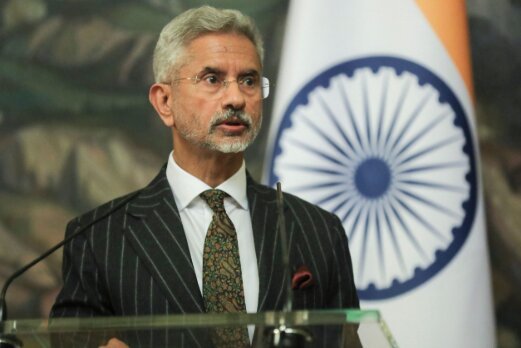
India is managing a delicate geopolitical balance following a major escalation in the Middle East. On Friday, the Indian government formally denied reports that it provided intelligence to the United States regarding an Iranian warship targeted off the coast of Sri Lanka. The Ministry of External Affairs described these claims as “baseless,” emphasizing India’s neutral stance. Meanwhile, the Indian Navy launched a major rescue operation for Iranian sailors, and the U.S. Treasury Department issued a temporary 30-day waiver allowing Indian refiners to continue purchasing Russian oil to stabilize domestic energy reserves amidst the widening conflict.
On the domestic front, Union Home Minister Amit Shah announced a historic milestone for internal security. Speaking at the CISF Raising Day in Cuttack, he reiterated the government’s commitment to making India entirely free from Maoist violence by March 31, 2026. He stated that the “Red Corridor” dream of insurgents is being dismantled and announced that the CISF would now take over the security of all major Indian ports and serve as the nodal agency for drone security. This shift aims to fortify the country’s industrial and maritime infrastructure against modern aerial and coastal threats.
In state-level politics, West Bengal Chief Minister Mamata Banerjee launched a high-profile sit-in protest at Kolkata’s Esplanade. She accused the Election Commission of India and the BJP of a “conspiracy” to disenfranchise millions of voters after significant deletions were noted in the post-SIR electoral rolls. This political escalation comes as President Droupadi Murmu visits the state to launch the Darjeeling Hill Festival. Simultaneously, major gubernatorial shifts were announced, with new Governors appointed for Bihar and Tamil Nadu, signaling a significant administrative reshuffle ahead of upcoming assembly polls in multiple states.
Prime Minister Narendra Modi focused on the agrarian economy today, addressing a post-budget webinar on “Agriculture and Rural Transformation.” He urged farmers to focus on high-value, export-oriented crops to make Indian agriculture globally competitive. Later, the PM participated in the Raisina Dialogue 2026 in New Delhi, where he met with world leaders, including the President of Finland, to discuss strategic connectivity and the future of global trade. The day concluded with the Prime Minister announcing a massive ₹33,500 crore infrastructure package for Delhi, including new Metro corridors, scheduled for inauguration this weekend.