Kavitha Slams Revanth Reddy Govt Over Agricultural Distress
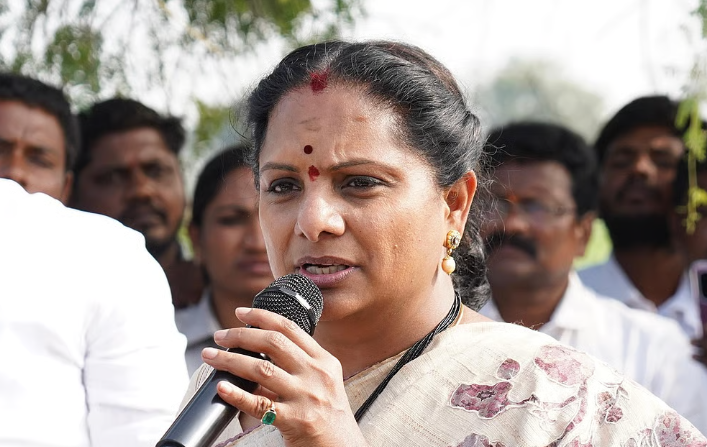
.Political friction across the region reached new heights as senior opposition leaders addressed farming communities. The recent political climate has been dominated by intense debates concerning agricultural welfare and rural development. A prominent opposition leader launched a scathing critique against the ruling administration’s handling of the sector. Thousands of farmers across various districts are reportedly facing severe hardships due to unexpected weather patterns. Speakers at a regional convention accused the government of failing to provide timely relief measures. They pointed out that prolonged dry spells have severely impacted crop yields and overall agricultural productivity. The ruling party leadership was urged to take immediate stock of the growing rural distress. Party representatives emphasized that agrarian communities are the backbone of the state’s economy. Without adequate financial support, vulnerable farmers risk falling into deep debt cycles. Counter-statements from government ministers quickly followed to defend the administration’s policy track record. Officials maintained that comprehensive relief packages and input subsidies are being distributed transparently. They argued that opposition figures are politicizing natural climatic challenges for electoral gain. Local media outlets broadcast live updates of the escalating verbal duel between political rivals.
Agricultural experts noted that long-term sustainability solutions are urgently needed to protect cultivators. Irrigation projects and power supply regularity became central talking points in the ongoing dispute. Farming unions demanded loan waivers and immediate compensation for damaged crop acreage. Protest rallies were organized in multiple semi-urban centers to draw attention to rural grievances. Police departments maintained a heavy presence to keep the public demonstrations peaceful and orderly. Civil society groups have appealed to both political factions to prioritize practical solutions over rhetoric. The state assembly is expected to witness stormy sessions when legislators reconvene next week. Political analysts suggest that rural voter sentiment will play a decisive role in upcoming electoral contests. Grassroots party workers have been instructed to conduct door-to-door outreach campaigns across villages. Opposition leaders promised to intensify their agitation if concrete remedial steps are not announced soon. The administration remains under intense pressure to demonstrate empathy toward struggling cultivators. Transparency in welfare delivery continues to be demanded by all stakeholder organizations. Every political camp is busy recalibrating its strategy to secure maximum support in rural constituencies. Economic observers warn that prolonged agricultural distress could dampen overall regional market growth. Financial institutions are monitoring credit repayment rates among farming households very closely. Cooperative societies report a surge in demand for short-term crop loans as liquidity tightens. Youth in rural areas expressed deep anxiety regarding future livelihood opportunities outside farming. State authorities promised to convene a high-level review meeting with agricultural scientists. Innovations in crop insurance and resilient farming techniques are slated for future implementation.
Public trust in governance frameworks depends heavily on how swiftly these rural crises are managed. As the political debate continues, citizens await tangible policy changes rather than verbal promises. The unfolding narrative highlights the delicate balance between political ambition and public service. Community elders have attempted to mediate between conflicting political factions to restore harmony. The resilience of the local farming populace remains the single biggest constant amid political storms. Media commentators continue to analyze the long-term electoral implications of these developments. Every stakeholder hopes for a constructive breakthrough that alleviates the burden on farmers. The coming days will test the administrative capability and responsiveness of regional leadership. Political strategists are burning midnight oil to frame effective counter-narratives for voters. The overarching goal for any administration must be the absolute welfare of its citizens. As evening falls, leaders retire to closed-door meetings to plan their next political moves. The populace watches closely, expecting accountability, compassion, and swift administrative action. Peace, prosperity, and progress remain the ultimate benchmarks of successful democratic governance.
The current friction serves as a stark reminder of the challenges facing rural communities. Transparent communication between the government and farmers is essential for rebuilding trust. Future policy blueprints must incorporate direct feedback from cultivators at the ground level. The enduring spirit of cooperation will hopefully guide the state through this testing period. As updates surface daily, public engagement with agricultural issues remains exceptionally high. Legislative oversight and judicial watchfulness ensure that public welfare remains front and center. The political landscape will continue to shift dynamically as new events unfold across districts. Citizens demand honest evaluations and permanent fixes rather than temporary band-aid solutions. The commitment to uplifting the farming community must transcend partisan political boundaries. Every leader carries the moral obligation to protect those who feed the nation daily. Hope persists that collaborative dialogue will eventually yield positive outcomes for everyone involved. The historical significance of these rural movements will undoubtedly shape future political discourse. As new mornings break, the struggle for agricultural justice and equity marches steadily forward. The collective voice of the rural populace cannot and will not be ignored by authorities. Justice and fairness must prevail to secure a prosperous and stable future for all.