Supreme Court’s Remark on Women’s Representation in Parliament
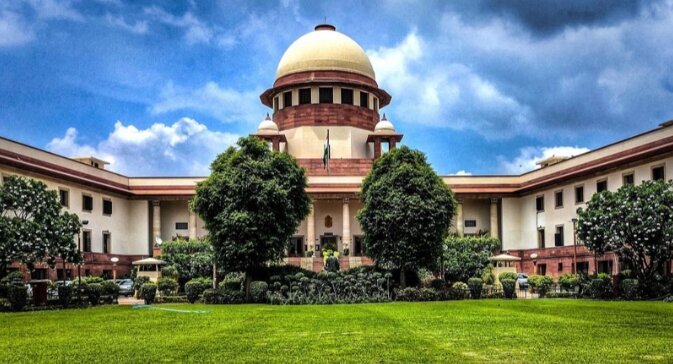
In a powerful intervention, the Supreme Court of India on Monday issued a clear notice to the Central Government regarding the delay in implementing the landmark Women’s Reservation Act. A Bench, led by Justice B.V. Nagarathna, the sole woman judge currently in the Apex Court, made a profound observation, stating that women are the “largest minority” in India, constituting nearly 48 per cent of the total population, yet their presence in legislative bodies is steadily declining.
The court was hearing a petition that challenges the clause within the new law that links its implementation to the completion of the next census and subsequent delimitation exercise. This specific condition, often referred to as a “clog,” effectively places the 33 per cent reservation for women in the Lok Sabha and State Assemblies on an uncertain timeline, potentially spanning years. The petitioner argued that the delay is indefensible, pointing out that previous constitutional amendments, such as the one for the EWS quota, were implemented immediately without such prerequisites.
Justice Nagarathna pointedly questioned why political parties could not act on their own volition. She observed that if the Constitution promises political and social equality to all citizens, then political entities should demonstrate their commitment to gender parity by voluntarily increasing women’s representation even without the mandatory reservation coming into force. This oral remark underscores the responsibility that lies with political leadership to actively facilitate the entry of women into decision-making roles, rather than relying solely on judicial or statutory enforcement.
The legal challenge specifically seeks to have the limiting clause within the Nari Shakti Vandan Adhiniyam declared void. The plea states that the spirit of the Constitutional Amendment, which was passed with near-unanimous support in Parliament in September 2023, is being undermined by conditioning its effect on a process (the census and delimitation) for which no firm commencement or completion date has been fixed. The counsel for the petitioner lamented the fact that 75 years after independence, women still have to petition the highest court for basic political equality.
While acknowledging that the enforcement of a law is fundamentally the executive’s responsibility, the Bench issued a formal notice to the Central Government, asking for an official response to the plea. The Court also directed that the petition be served to the relevant Union Ministries. This judicial action marks a significant step in pressuring the government to address the uncertainty surrounding the law. The attention now turns to the executive and the ruling political parties to provide a clear roadmap for the immediate fulfillment of this long-pending promise of political justice for Indian women. The judgment highlights a critical phase where political will must align with the constitutional mandate to ensure genuine gender empowerment in the nation’s highest institutions.