Prime Minister Slams “Maha Jungle Raj” in Bengal
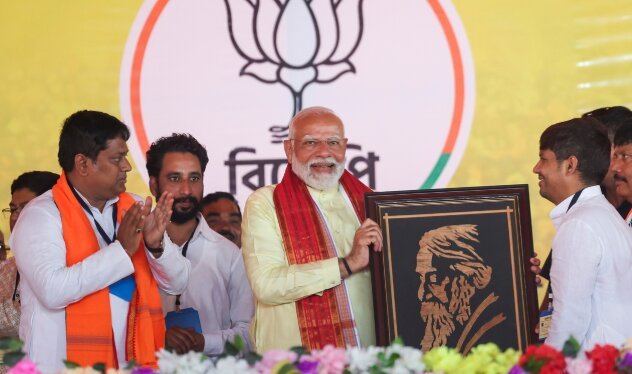
The political temperature in India surged , as Prime Minister Narendra Modi launched a blistering attack on the Trinamool Congress (TMC) during a massive election rally in Cooch Behar, West Bengal. Addressing the recent gherao of judicial officers in the Malda district, the Prime Minister labeled the incident a clear reflection of “TMC-sponsored maha jungle raj.” He argued that the state government no longer respects constitutional institutions or the rule of law. This rhetoric comes as West Bengal enters a critical phase of its assembly elections, with the BJP positioning itself as the only force capable of restoring administrative order and protecting the judiciary from political intimidation.
In another major development, the Congress Party has intensified its opposition to the government’s new delimitation proposal. Senior leader Jairam Ramesh termed the move a “Weapon of Mass Distraction” (WMD), designed to divert public attention from ongoing economic and foreign policy challenges. The proposal, which seeks to increase the number of seats in the Lok Sabha and State Assemblies based on the latest population data, has sparked a heated debate over regional representation. Opposition leaders from Southern and Western India fear that states with successful population control measures will lose political weight compared to the more populous “Hindi heartland” states like Uttar Pradesh.
The electoral battle also heated up in Assam, where Congress leader Rahul Gandhi leveled serious allegations against Chief Minister Himanta Biswa Sarma. During his campaign trail, Gandhi called Sarma the “most corrupt Chief Minister” in the country and promised that a future Congress-led government would initiate strict legal action against him. Meanwhile, the BJP continued its high-decibel campaign in the state, with local leaders emphasizing infrastructure growth and the “double-engine” development model. The exchange of personal attacks indicates an increasingly polarized environment as the northeastern state prepares for its final rounds of voting.
On the legislative front, the Union Government has introduced the Foreign Contribution (Regulation) Amendment Bill, 2026, in the Lok Sabha. The bill aims to tighten oversight on non-governmental organizations (NGOs) by creating a “Designated Authority” with powers to manage or dispose of assets created from foreign funds. While the government argues this is necessary for national security and financial transparency, opposition parties have stalled discussions, citing concerns over excessive central control. The bill’s introduction has mobilized civil society groups and international observers who are closely monitoring the impact on India’s non-profit sector.
Finally, a major international crisis cast a shadow over domestic politics as tensions escalated in West Asia. Following the rescue of a U.S. airman in Iran, the Indian government issued a high-level assurance regarding maritime safety and fuel supplies. With the conflict entering its sixth week, the Centre is working to manage potential disruptions to energy imports. Domestically, this has led to a ban on direct LPG cylinder sales from godowns in Delhi to prevent hoarding. These five events—ranging from state elections and legislative battles to global security—defined a high-stakes Sunday for Indian politics.