Parliamentary Panel Formed on Bills for Removal of Ministers
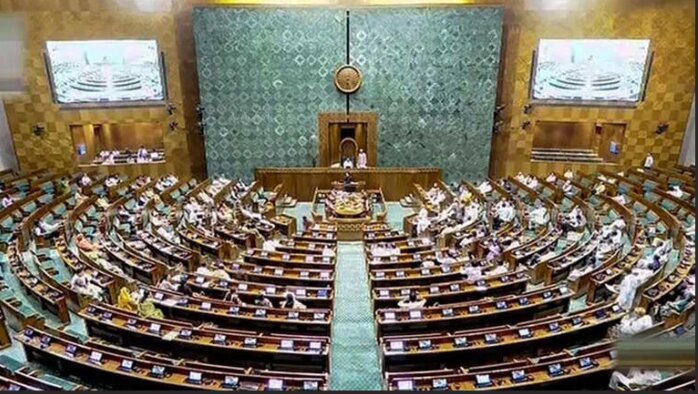
A Joint Committee of Parliament has been officially constituted to undertake a detailed examination of three significant bills, including one that proposes a legal mechanism for the removal of the Prime Minister, Chief Ministers, and Union or State Cabinet Ministers. Bharatiya Janata Party (BJP) Member of Parliament, Aparajita Sarangi, has been appointed as the chairperson of the 31-member committee. This panel will deliberate on the controversial Constitution (One Hundred and Thirtieth Amendment) Bill, 2025, along with two related bills concerning Union Territories and the reorganization of Jammu and Kashmir.
The core amendment seeks to establish a clear legal process for the removal of high-ranking elected officials if they are arrested and detained in custody for 30 consecutive days on serious criminal charges.According to the bill, if a Minister, Prime Minister, or Chief Minister is held for an offense carrying a potential imprisonment term of five years or more, they would cease to hold office by the 31st day, unless they resign earlier. The government’s stated aim is to uphold constitutional morality and public trust in governance by ensuring that officials facing serious criminal allegations do not continue in office.
However, the formation of the committee has been met with significant political controversy. Several key opposition parties, including the Congress and the Trinamool Congress (TMC), have announced their decision to boycott the Joint Parliamentary Committee (JPC). They argue that the bill violates the fundamental legal principle of “innocent until proven guilty” by mandating automatic removal based on mere arrest, before a conviction is secured.Opposition leaders contend that such a provision could be misused politically to destabilize elected governments.
The 31-member panel is comprised primarily of members from the ruling NDA alliance.Out of the total strength, the committee includes only a handful of members from the non-ruling parties, such as Supriya Sule of the NCP (Sharadchandra Pawar), Asaduddin Owaisi of AIMIM, Harsimrat Kaur Badal of the Akali Dal, and a representative from the YSRCP. The overwhelming composition of the committee has led to further criticism from the boycotting opposition, who have termed the panel a mere “rubber stamp.”
Despite the opposition’s decision to stay away, the Lok Sabha Speaker emphasized that parliamentary panels are intended to function as “mini-parliaments,” where members discuss issues rising above narrow political lines.The Speaker stated that efforts were made to ensure the representation of all political parties. The Joint Committee is now tasked with scrutinizing the proposed legislation and submitting its recommendations before the bills are brought back to Parliament for final consideration, likely during the upcoming winter session. This process is expected to trigger intense debate on the balance between legal principles and political accountability.