India Faces Global and Domestic Policy Shifts
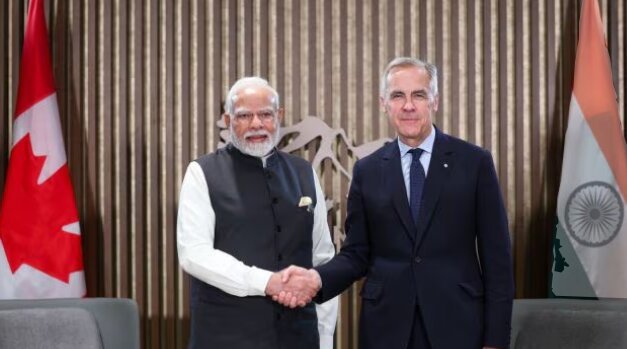
Prime Minister Narendra Modi and Canadian Prime Minister Mark Carney concluded a historic meeting in New Delhi today. The two leaders signed a major $1.9 billion agreement for Canada to supply 22 million pounds of uranium to India through 2035. This visit marks a significant reset in bilateral relations, with both nations targeting $50 billion in two-way trade by 2030.
The Indian government is facing intense pressure from opposition leaders over its diplomatic stance on the West Asia crisis. Congress leaders Sonia Gandhi and Rahul Gandhi have publicly criticized the Prime Minister’s “silence” following the assassination of Iran’s Supreme Leader. They argued that failing to take a clear moral stand diminishes India’s global influence and ignored the safety of millions of Indians working in the Gulf.
In response to the escalating Iran-Israel conflict, the Ministry of External Affairs issued a high-level advisory for Indian nationals in Iran to remain indoors. Prime Minister Modi has been personally engaging with world leaders, holding phone conversations with the Sultan of Oman and the Crown Prince of Kuwait. These talks focused on regional stability and the welfare of the Indian diaspora amidst deteriorating security conditions.
On the domestic front, the Election Commission of India (ECI) has entered the final phase of poll preparations. Official teams are currently visiting Kerala and West Bengal to review security and logistical readiness. Sources indicate that the schedule for assembly elections in West Bengal, Tamil Nadu, Assam, Kerala, and Puducherry will likely be announced shortly after March 10.
Prime Minister Modi also addressed a national post-budget webinar today, highlighting India’s role as a “beacon of hope” for the global economy. He urged Indian industries to invest heavily in research and development to establish the country as a resilient manufacturing hub. Additionally, he reaffirmed India’s commitment to wildlife conservation on World Wildlife Day, noting that India now hosts over 70% of the world’s tiger population.