Court Clears 42% BC Quota for Telangana Polls
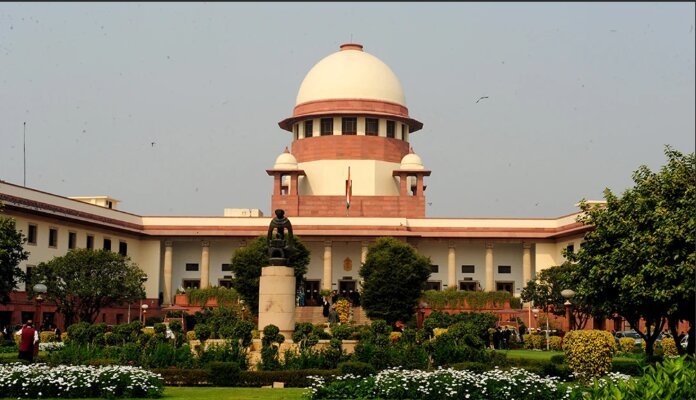
The Supreme Court of India has dismissed a petition challenging the Telangana government’s decision to allocate 42% reservation to Backward Classes (BCs) in upcoming local body elections. This ruling marks a significant moment in the state’s electoral landscape, reinforcing the government’s commitment to inclusive representation.
A bench comprising Justice Vikram Nath and Justice Sandeep Mehta stated that the petitioner could not directly invoke Article 32 of the Constitution, especially when similar cases were already pending before the Telangana High Court. The apex court emphasized that the High Court is the appropriate forum for such matters and granted liberty to the petitioner to pursue relief there.
This decision comes amid heightened political activity in Telangana, where local body elections are expected to shape grassroots governance. The 42% quota for BCs, combined with existing reservations for SCs and STs, pushes the total reservation beyond the 50% ceiling traditionally upheld by the judiciary. However, the Telangana government argues that the enhanced quota is backed by empirical data and fulfills the “triple test” laid down by the Supreme Court for OBC reservations.
The triple test includes:
- A dedicated commission to conduct a rigorous empirical inquiry.
- Local body-wise specification of reservation based on that data.
- A ceiling ensuring total reservation does not exceed constitutional limits.
The petitioner contended that the government order breached this ceiling and lacked proper justification. However, the Supreme Court’s dismissal signals judicial restraint and deference to the High Court’s jurisdiction.
Political analysts believe this ruling could influence similar quota debates in other states. It also places the spotlight on the Telangana High Court’s upcoming hearing, which will further determine the legal standing of the enhanced BC quota.
For voters and candidates alike, this development reshapes expectations and strategies. Parties representing BC communities have welcomed the decision, calling it a step toward equitable representation. Meanwhile, opposition voices urge caution, citing concerns over constitutional balance and electoral fairness.
The Telangana State Election Commission is expected to proceed with preparations, incorporating the revised quota structure. This includes reworking ward-level seat allocations and updating candidate eligibility criteria.
Public response has been mixed. While many BC leaders and community organizations celebrated the ruling, others expressed concern about the cumulative impact of reservations on general category representation. Legal experts suggest that the High Court’s verdict will be pivotal in resolving these tensions.
In rural Telangana, where BC communities form a significant demographic, the quota expansion could lead to increased political participation and leadership emergence. Urban constituencies may also see a shift in candidate profiles and campaign narratives.
The ruling aligns with broader national conversations on social justice, representation, and constitutional limits. It underscores the judiciary’s role in balancing governance and equity, while respecting procedural hierarchy.
As the legal and political journey continues, stakeholders await the High Court’s next move. For now, the Supreme Court’s stance offers clarity and momentum to Telangana’s electoral roadmap.