Cabinet Approves Merger of 27 Municipalities into GHMC
The State Cabinet of Telangana has approved a landmark decision to significantly expand the boundaries of the Greater Hyderabad Municipal Corporation (GHMC), a move that will redefine the state capital’s urban landscape. This major resolution involves the merger of twenty-seven municipalities and urban local bodies (ULBs) that currently fall within and around the Outer Ring Road (ORR) limits, creating one of the largest metropolitan governance areas in the country.
This integration is expected to nearly triple the GHMC’s current geographical area, extending its jurisdiction from approximately 650 square kilometres to an estimated 1,800 to 2,000 square kilometres. The primary goal is to address the rapid, often uneven, urban sprawl that has characterized the Hyderabad metropolitan region, ensuring that core city standards are uniformly applied to the periphery. The expansion aims to foster regulated, planned development, prevent haphazard construction, and provide consistent, high-quality civic services to all residents.
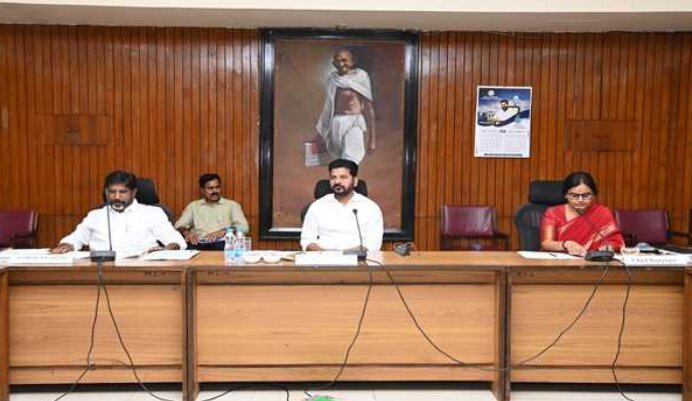
The decision was formalized during the Cabinet meeting chaired by the Chief Minister on Tuesday. Necessary amendments to both the GHMC Act and the Telangana Municipal Act will be introduced to facilitate this large-scale administrative integration smoothly. The government noted that the term of many of these peripheral local bodies has recently concluded, making this an opportune moment for the merger.
This significant step is driven by the need for equitable service delivery. The current scenario sees major disparities in the quality of roads, sanitation, water supply, and overall planning standards between the core city and the outlying municipalities. By bringing these areas under the GHMC umbrella, the government promises uniform infrastructure quality, improved resource mobilisation, and better coordination for urban planning and disaster management.
The twenty-seven ULBs slated for merger include key areas such as Shamshabad, Manikonda, Narsingi, Pedda Amberpet, Thukkuguda, Medchal, and Nizampet, among others. These are areas that have witnessed massive residential and commercial growth due to their proximity to the ORR and the main city’s IT and industrial hubs.
Furthermore, the expansion is expected to enhance Hyderabad’s appeal to global investors by offering a more coherent and structured urban administration for their projects. Officials highlighted that having a single, powerful civic body managing the core urban area will facilitate a streamlined process for obtaining necessary approvals and clearances for major infrastructural and industrial investments.
The Cabinet also approved a massive parallel plan to upgrade the city’s civic framework. This includes a decision to implement a full underground cable system across the GHMC limits, replacing all overhead electrical and utility wires. This project, estimated to cost over fourteen thousand crore rupees, is intended to modernise the city’s infrastructure, prevent power outages, and clear the skyline, mirroring successful models in other global cities. This dual focus on administrative expansion and infrastructure modernization signals a strong commitment to transforming Hyderabad into a truly global, “Maha GHMC” metropolis ready for the challenges and opportunities of the future. The merger will likely increase the number of GHMC wards, leading to a major reorganisation of local politics and governance.