BRS Claims “Victory for Democracy” in Civic Polls
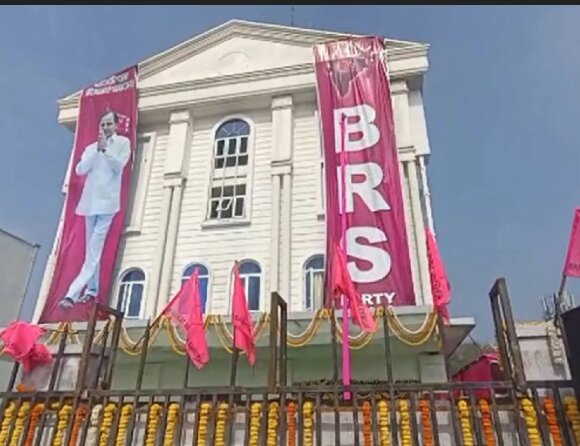
The political landscape in Telangana witnessed a major shift , as the Bharat Rashtra Samithi (BRS) secured crucial wins in the municipal chairperson elections. Following weeks of intense legal battles and political maneuvering, the BRS-led alliance successfully took control of the Ibrahimpatnam and Kyathanpally municipalities. In Ibrahimpatnam, T. Sudershan Reddy of the BRS was elected Chairman, while the Kyathanpally municipality in the state’s coal belt was won by the BRS-CPI combine. BRS working president K.T. Rama Rao hailed the results as a “resounding victory for democracy,” claiming the party overcame “unethical pressure” from the ruling Congress to maintain its stronghold.
While the opposition celebrated its civic wins, Chief Minister A. Revanth Reddy issued a significant administrative order aimed at preserving the sanctity of religious sites. Drawing inspiration from the Tirumala Tirupati Devasthanams (TTD), the Chief Minister directed officials to implement “Tirumala-style” norms at major temples across Telangana, starting with the Gnana Saraswati Temple in Basara. Under these new rules, no political meetings, party flags, or demonstrations will be permitted within temple precincts. The move is seen as a strategic attempt to de-politicize religious spaces and enhance the spiritual experience for pilgrims, a decision that has sparked widespread discussion among the state’s political circles.
On the legislative front, the Telangana High Court delivered an interim order that has caused ripples in the state’s education sector. Due to the government’s delay in releasing nearly ₹10,000 crore in tuition fee reimbursement dues, the court has permitted several private professional colleges to collect fees directly from students starting the 2026-27 academic year. This decision has drawn sharp criticism from BRS leaders and student organizations, who argue that it effectively “scraps” the welfare scheme and places an unbearable financial burden on nearly 14 lakh students from marginalized communities. The government is now under immense pressure to release pending funds to prevent a full-scale student protest.
The political rivalry between the Congress and BRS also spilled over state borders. BRS spokesperson Ravula Sridhar launched a scathing attack on Chief Minister Revanth Reddy for his recent campaign visit to Kerala. Sridhar accused the CM of “misleading” people in other states with tall promises while failing to implement the “Six Guarantees” in Telangana. He specifically highlighted the unfulfilled promises of increased pensions and the ₹2,500 monthly assistance for women. This “export of promises” has become a central talking point for the opposition, which claims the ruling party is neglecting its home base to pursue national political ambitions.
Finally, the state’s election machinery announced a delay in the Special Intensive Revision (SIR) of electoral rolls. Chief Electoral Officer C. Sudharshan Reddy confirmed that the process, originally slated for April, will likely be pushed to May due to the deployment of staff for the ongoing national census and elections in other states. This delay has raised concerns about the slow pace of voter mapping in urban hubs like Hyderabad and Medchal-Malkajgiri. With municipal tensions rising and major policy shifts underway, April 4 proved to be a pivotal day that balanced grassroots electoral battles with high-level administrative reforms.