Bangladesh Refuses to Travel to India for T20 World Cup
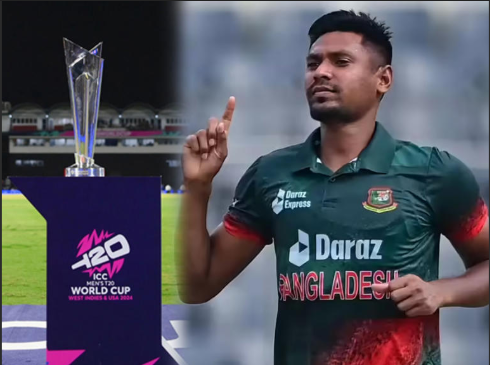
The Bangladesh Cricket Board (BCB) has officially informed the International Cricket Council (ICC) that its national team will not travel to India for the 2026 T20 World Cup. This decision, announced following an emergency board meeting on January 4, 2026, cites significant concerns over player safety and the prevailing political climate. The move has sent shockwaves through the sporting world, as the tournament is scheduled to begin in just over a month on February 7.
The primary catalyst for this standoff was the sudden removal of star pacer Mustafizur Rahman from the Kolkata Knight Riders (KKR) roster. The BCCI reportedly instructed the franchise to release the bowler due to growing diplomatic tensions and concerns regarding the safety of minorities. In response, Bangladesh’s sports ministry advised the BCB that if a single contracted player is deemed “unsafe” to participate in a domestic league, the entire national contingent cannot be expected to tour for a global event.
According to the original tournament schedule, Bangladesh was slated to play three of its group-stage matches at the Eden Gardens in Kolkata and one at the Wankhede Stadium in Mumbai. The BCB has formally requested the ICC to relocate these fixtures to Sri Lanka, the co-host of the event. This request mirrors the “hybrid model” recently used for the Asia Cup, where certain teams played their matches at neutral venues to avoid travel to specific host nations.
Logistically, the ICC now faces a massive challenge. With the opening match between West Indies and Bangladesh scheduled for February 7 in Kolkata, there is very little time to reorganize security, ticketing, and broadcasting arrangements. Former cricketers and analysts have noted that reshuffling a World Cup schedule at such short notice is nearly impossible. If a compromise is not reached, the ICC may have to consider awarding points to opponents or finding a last-minute replacement team.
The diplomatic friction between the two neighbors has escalated since late 2025, impacting cultural and sporting exchanges. While the Indian government maintains that security is a top priority for all visiting athletes, the Bangladeshi administration has taken a firm stance against what they describe as “aggressive policies.” As the clock ticks down to the World Cup opener, fans across both nations are waiting to see if cricket can prevail over the current political deadlock.