Yerevan Pathway Sets New Global Direction for Nature Protection
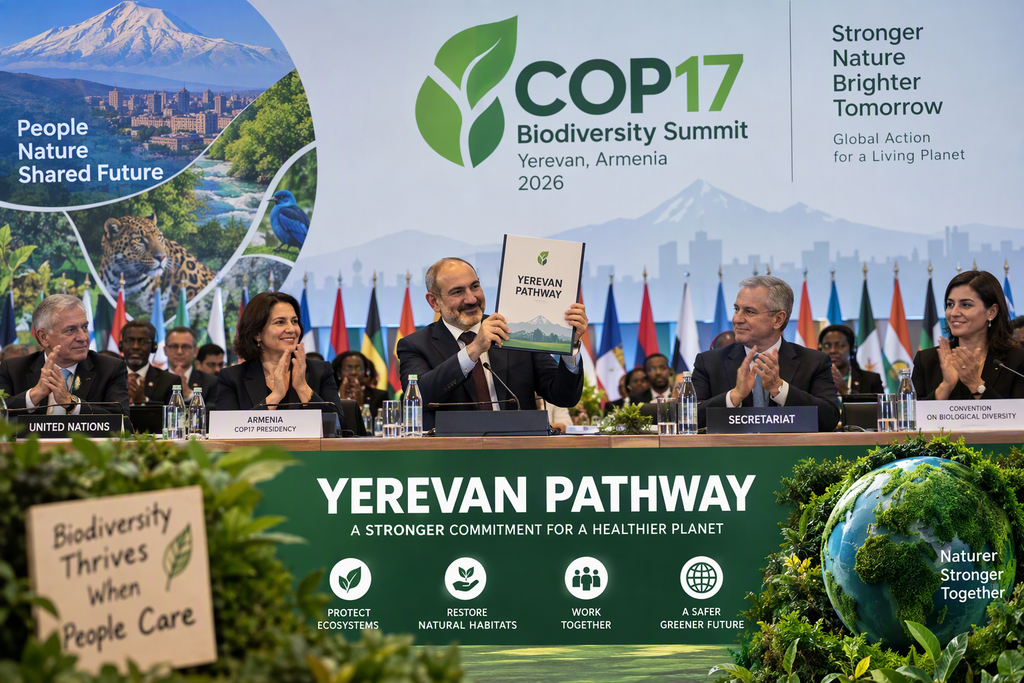
As nations across the world continue to face the growing challenges of climate change, habitat destruction, species decline, and environmental degradation, a significant development has emerged from the global biodiversity community. Representatives from countries participating in the COP17 Biodiversity Summit in Yerevan, Armenia, have reached an agreement on a new international framework known as the Yerevan Pathway. The agreement is expected to strengthen cooperation among nations and accelerate efforts aimed at protecting ecosystems, restoring natural habitats, and preserving biodiversity through 2030. The decision reflects increasing global recognition that environmental conservation is closely linked to economic stability, food security, sustainable development, and public well-being.
The Yerevan Pathway arrives at a time when governments, researchers, environmental organizations, and communities are expressing growing concerns about the rapid loss of biodiversity in many regions of the world. Forests, wetlands, grasslands, rivers, oceans, and other ecosystems continue to face pressures from urban expansion, unsustainable land use, pollution, and changing climate conditions. The new pathway is designed to encourage stronger commitments from participating countries and support practical strategies that can produce measurable progress during the remainder of the decade.
Delegates attending the summit emphasized the importance of turning environmental commitments into real-world action. Discussions focused on strengthening conservation programs, improving ecosystem management, encouraging nature-friendly economic policies, and expanding cooperation between governments and scientific institutions. The agreement highlights the need for countries to share knowledge, technology, and resources to address biodiversity challenges that extend beyond national borders. Environmental experts believe such cooperation will be essential in achieving long-term sustainability goals.
The summit also highlighted the critical role that healthy ecosystems play in supporting human life. Biodiversity contributes directly to agriculture, fisheries, clean water supplies, medicinal resources, and climate resilience. Protecting natural environments is increasingly viewed not only as an environmental responsibility but also as an economic and social necessity. Many countries attending the summit stressed that future development strategies must balance economic growth with environmental stewardship to ensure lasting prosperity.
Another major area of discussion involved expanding restoration efforts in regions that have suffered environmental damage over recent decades. Experts noted that restoring degraded landscapes can improve soil health, strengthen water resources, increase carbon storage, and provide safer habitats for wildlife. The Yerevan Pathway is expected to encourage greater investment in restoration initiatives while helping nations coordinate actions that generate long-term environmental benefits.
The agreement further recognizes the importance of involving local communities, Indigenous populations, researchers, conservation groups, and private sector stakeholders in biodiversity protection efforts. Many successful conservation initiatives around the world have demonstrated that local participation often leads to more sustainable outcomes. By promoting inclusive approaches, the pathway aims to create stronger support for conservation measures and improve implementation at the regional and national levels.
Financial support and resource mobilization were also central themes during the summit discussions. Developing nations have frequently pointed out that achieving ambitious biodiversity targets requires adequate funding, technical assistance, and capacity building. Participants acknowledged that successful implementation of conservation measures will depend on sustained investment and long-term commitment from both public and private institutions. Efforts to strengthen environmental financing are expected to play a key role in achieving future biodiversity objectives.
Environmental observers have welcomed the adoption of the Yerevan Pathway as an encouraging step toward stronger international cooperation. Many experts argue that biodiversity loss remains one of the most urgent global challenges alongside climate change. They believe that coordinated action over the next several years will be crucial in preventing irreversible damage to ecosystems and protecting countless plant and animal species for future generations.
The decision reached in Yerevan also sends a broader message about the growing willingness of nations to work together on shared environmental priorities. While countries may differ in geography, economic structures, and development goals, biodiversity conservation is increasingly recognized as a common responsibility. The Yerevan Pathway provides a framework through which governments can align efforts, exchange successful practices, and accelerate action toward agreed international objectives.
Looking ahead to 2030, the success of the Yerevan Pathway will depend on how effectively participating countries translate commitments into tangible outcomes. Environmental advocates, policymakers, and scientific communities will closely monitor progress as nations work toward strengthening conservation measures and protecting the world’s natural heritage. The agreement has created renewed momentum for biodiversity protection and offers an opportunity for countries to demonstrate that international collaboration can deliver meaningful results for nature, communities, and future generations. [